Openly Governed Production Proven 100% Open Source
The 2025 State of Open Source in Financial Services_2025_Infographic_04
The 2025 State of Open Source in Financial Services_2025_Infographic_11
The 2025 State of Open Source in Financial Services_2025_Infographic_01

Why Open Source in Finance?

In regulated industries, 80% of the technology stack is non-differentiating. By collaborating on this shared infrastructure through FINOS, institutions mutualize development costs to build safer, compliant, and interoperable systems faster.

The FINOS Difference: Open Governance & License Stability

These projects are immune to vendor "rug pulls" or restrictive license changes because they are protected by The Linux Foundation. You get fully production-proven solutions actively used by major global banks—with no "Enterprise Edition" paywalls, no hidden costs, and no lock-ins.

View Session Recordings Here or View Selected Resources

FINOS: TECH STACK FOR REGULATED industries

Access the production-ready open source standards, compute engines, and governance frameworks powering the world’s leading financial institutions.
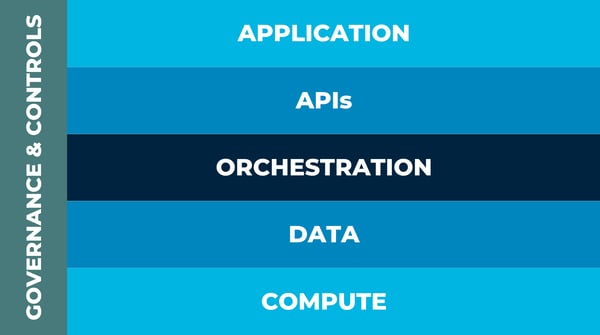
FINOS Ecosystem Tech Stack

SESSION RECORDINGS - PARIS 2025

Kickoff: FINOS The Open Source Tech Stack for Regulated Industries
Let's explore how open source is reshaping the financial services industry, offering a strategic alternative to traditional "buy or build" dilemmas. We’ll dive into the transformative power of collaboration, showcasing how financial institutions—from global banks to fintechs—are leveraging open-source solutions to drive innovation, reduce costs and risks, and navigate regulatory complexity.
HTC Grid: Building and Running an HPC Grid Using Cloud Native Services
HTC Grid is a reference architecture that can be used to build and adapt a modern High throughput compute solution using underlying AWS services.
Towards Confidential AI
In this session Olivier Richaud overviews AI in financial services.
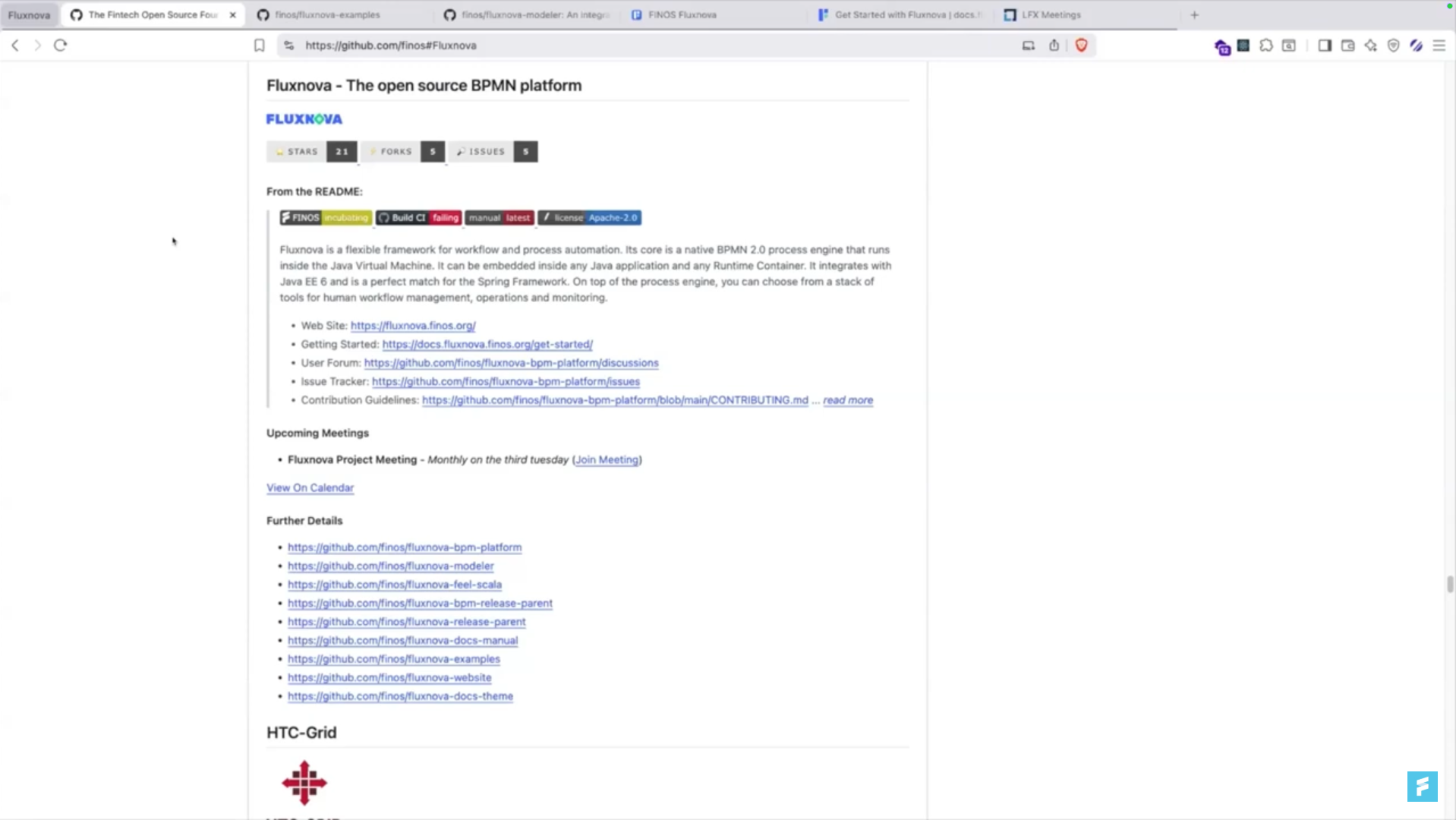
Fluxnova: Orchestrating Financial Workflows with Open Source BPMN | Sean Walsh, Fidelity
In this session, Sean Walsh (Fidelity Investments) uses the analogy of a "music conductor" to explain the critical role of Fluxnova in modern FinTech. He details how Fidelity and four other global banks collaborated to fork Camunda 7 Community Edition, ensuring the future of an orchestration engine that powers millions of daily process instances.
Fluxnova: Agentic AI Orchestration
This session will concentrate on the capabilities of an autonomous AI agent. We will explore how to design this agent with advanced features like internal planning, long-term memory, and self-reflection. The focus is on empowering one agent to tackle complex, multi-step tasks by intelligently utilizing external tools (like search or code execution) and adapting its strategy dynamically. Attendees will learn the fundamental architecture required to create an intelligent AI that can independently pursue and achieve significant objectives.
Agentic AI Is Here. Ready to Govern It?
AI, particularly the rise of agentic systems, is proving to be one of the most disruptive technologies of our time, reshaping people, products, and processes across every sector. Yet alongside its transformative potential come new and distinctly challenging risks: hallucinations, inconsistency, limited explainability, and the difficulty of ensuring safe, secure, and compliant behaviour in real-world business environments. This talk explores how organisations can navigate these strengths and weaknesses in a balanced, pragmatic way, maximising value while applying the protective measures needed to meet regulatory expectations. As part of this, I will introduce the FINOS AI Governance Framework, showing how it can guide firms in managing AI responsibly and effectively.
Operationalizing the FINOS AI Governance Framework
The rise of agentic AI systems in financial services (FSI) introduces new challenges beyond traditional human-centric risk management. This talk addresses a core problem: how do we adapt established risk management and compliance frameworks, designed for people, to effectively govern autonomous agents? We will demonstrate how the open-source FINOS AI Governance Framework (AIGF) provides a vendor-neutral, machine-readable standard for identifying and mitigating AI-specific risks.
Unlocking the FINOS CDM
In this session from Georgina Tarres & Manuel Martos (TradeHeader) introduce the FINOS Common Domain Model (CDM) helping both business and technical participants with little or no CDM experience take their first steps toward building a CDM-based Java application.
Open Source Foundation & European Digital Sovereignty
Europe is investing heavily in digital sovereignty through initiatives like IPCEI-CIS and the proposed European Sovereign Tech Fund. This talk explains what open source foundations do, how they operate, and why global collaboration, not fragmentation, better serves European sovereignty goals. It argues that sovereignty comes from knowledge transfer through active strategic contribution and engagement, with the ability to modify and fork code representing this capability.
Fluxnova Masterclass

Resources list

sign up for finos updates